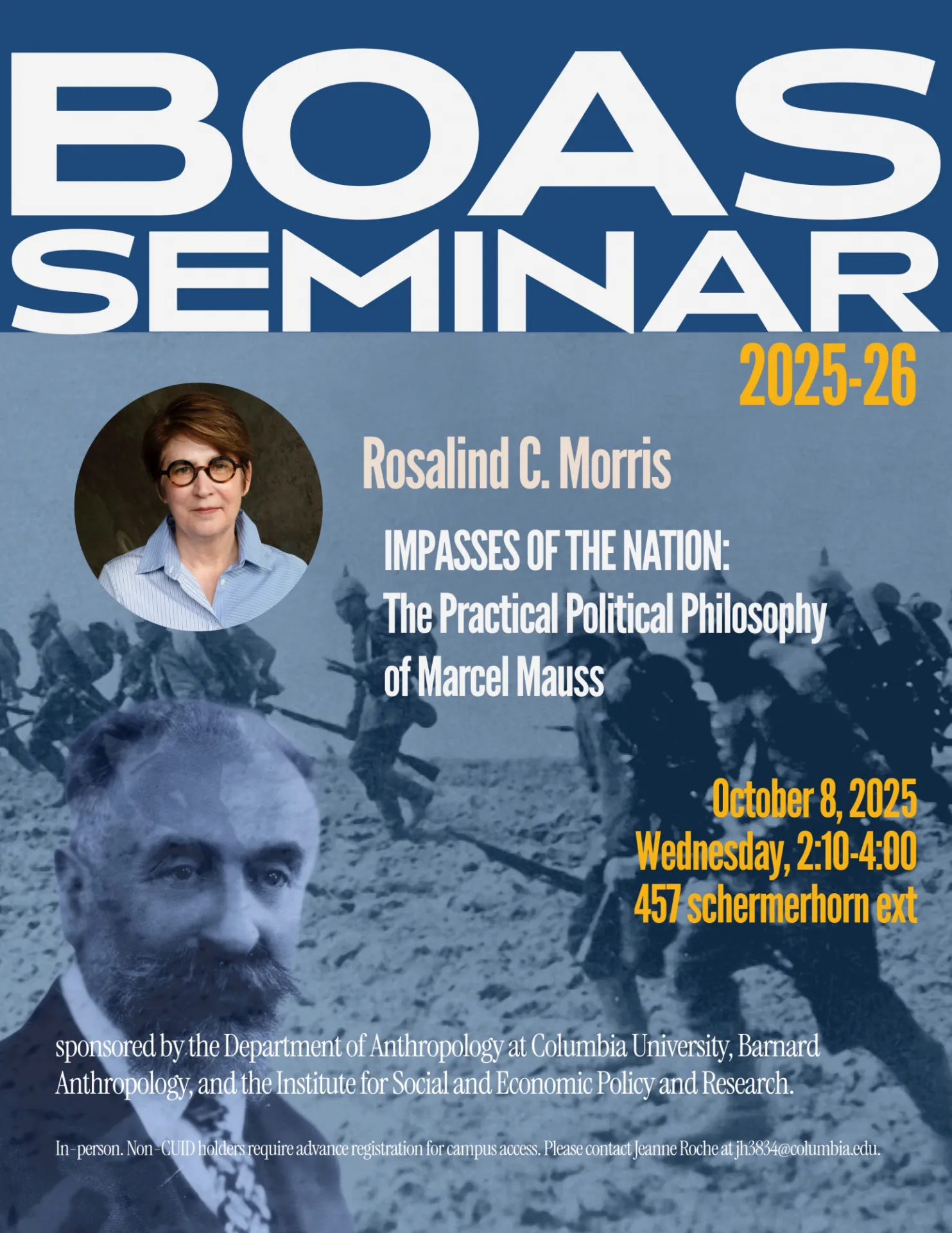
Sometime between 1914 and 1918, when Marcel Mauss was serving at the front for the French in World War I, he began to conceive of a book about the ‘the nation’—an idea that his uncle, Emile Durkheim, has brought into focus as an object of sociological analysis aat the turn of the century. In 1920, Mauss began writing in earnest. The book was never finally completed but seemed to reach an impasse as Mauss attempted to grasp the relationship—of dependency and mutual contradiction—between the nation and nationalism, and between nationalism and internationalism. This impasse was partly related to the changing nature of the social field under consideration, and especially the technicization of society. But it was also practical and political, and can be partly understood in terms of the context in which he wrote: of the immediate post-World War I era, when the attempt to generate the apparatus of international peace and reconciliation—via reparations and principles administered by international legal institutions—floundered as working-class nationalism and cosmopolitan capitalism allied against the more equitable ambitions of the radical socialist and cooperativist movements to which Mauss was himself deeply committed. This lecture returns to Mauss’s text in order to ask what anthropology might learn from this early confrontation with the force of nationalism.
Rosalind Morris is Professor of Anthropology at Columbia University. Her most recent publications as Unstable Ground: The Lives, Deaths, and Afterlives of Gold in South Africa (Columbia 2025); For Lack of a Dictionary: poems (Fordham, 2025); and, as editor, Reconocimientos: A Memoir of Becoming, by Rafael Sanchez (Fordham, 2025).